








Implant-supported Removable Dentures:
These prostheses are supported and retained by dental implants that were placed strategically along the dental arch by the dentist or the Oral Surgeon.
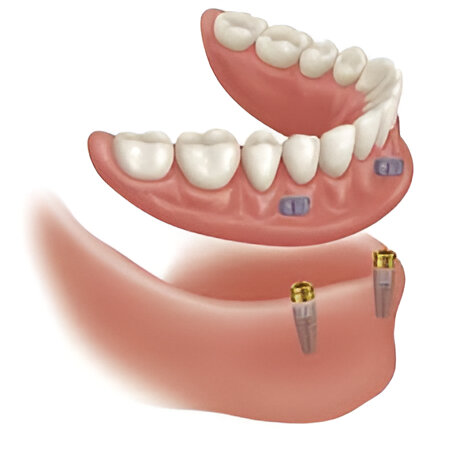
Locator-Retained Implant-Support Overdenture
This type of prostheses is also referred to as “Implant-supported Overdentures”, as they seat on top of the supporting dental implants and soft tissue. There are retentive mechanisms between the implant heads and the base of the dentures, allowing the “snap” fitting of the prostheses, with just a gentle insertion force. They are easy removed and inserted by the patients for hygiene care.
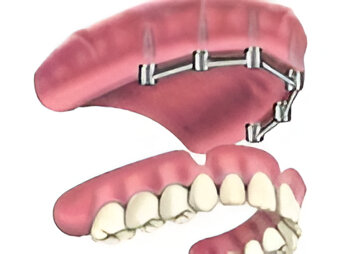
Bar-Retained Implant-Support Overdenture
Another option for this type of support is to connect the supporting implant together by way of a metal bar, for better stability and biting, as well as chewing force distribution. The denture will “snaps” on to the metal bar to gain support and retention. Additionally, it offers the patient the ability and convenience to remove and reinsert the prosthesis for better hygiene care.
Each treatment option is determined by the dentist’s thorough examine the patient’s mouth, study and consult necessary radiographs to ensure proper material selections, prosthesis designs, and patient’s desired outcome.
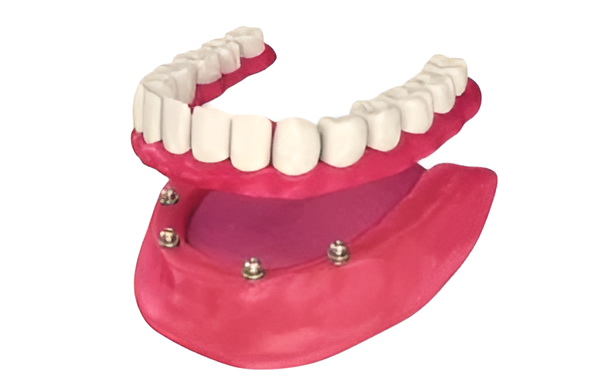
Ball-Retained Implant-Support Overdenture
This treatment modality is similar to the Locator-Retained Implant-Support Overdenture above.
Partial Implant-Supported Over-Denture
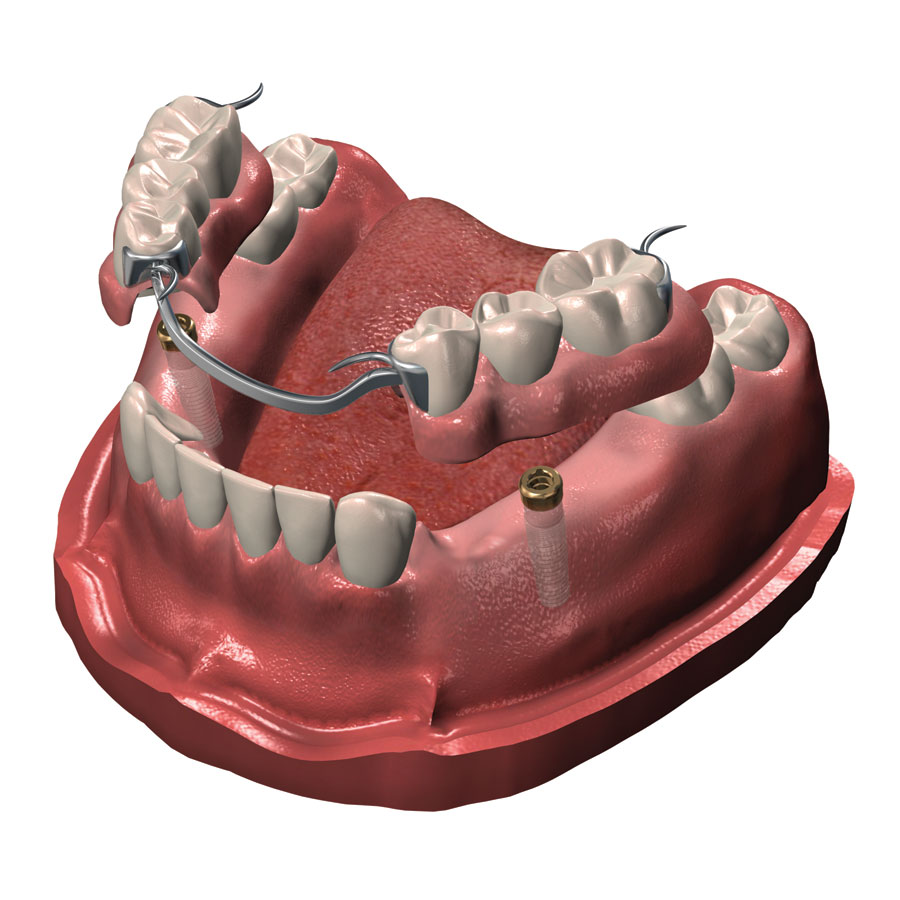
A partial implant-supported overdenture is a type of dental prosthesis designed for patients who have some, but not all, of their teeth missing. It combines the support of the dental implants with a removable denture to provide better stability and function that traditional removable partial dentures are lacking:
- Implant Support: The denture engages to the top of the dental implants to obtain support and secured retention.
- Removability: Unlike fixed dentures, partial implant-supported overdentures can easily be removed by the patient for cleaning and maintenance.
- Improved Stability: The implants help keep the denture in place, reducing its movements and improving patient’s comfort while eating and speaking.
- Bone Preservation: By stimulating the jawbone, implants help prevent the surrond bone loss that often occurs with tooth loss